Buying a used tractor in Ontario: what to check before you pay
Ontario doesn't require a used vehicle package for heavy trucks, so here is what to check on liens, emissions, safety and records before you pay.
By Manpreet Singh October 25, 2026 3 min read
ServiceOntario's page on the Used Vehicle Information Package lists a heavy truck with an empty weight of 2,200 kg or more among the vehicles that can change hands without one. So when you buy a highway tractor, whether privately or off a registered dealer's lot, nobody has to hand you the package a car buyer gets with its registration and lien history, and the checking falls to you.
Start with the seller and the paper. Ask to see the ownership permit and photo ID, and make sure the name on both matches the person taking your money. Then go to the truck, read the VIN off it yourself and match it to the permit and the bill of sale. ServiceOntario's guide to buying or selling a used vehicle tells buyers to physically inspect the VIN so they know the paperwork matches and hasn't been altered.
Run a lien search on that VIN through Ontario's personal property registry, whether you're buying privately or from a dealer. ServiceOntario's own wording is that a lien claimant has a right to the vehicle, or the amount of the lien, from the buyer once the transfer is completed, which is how a buyer ends up facing repossession over a debt they never signed for. If financing shows up, don't hand over money until you've called the lender yourself for a payout figure in writing and agreed how the lien gets discharged. If days have gone by since the viewing, search again right before you pay.
Ontario requires a used heavy diesel commercial vehicle older than the current model year to have a valid emissions test pass before ownership can transfer. That is a separate document from the safety standards certificate you need to plate the truck in your name. Under the DriveON program, an eligible annual inspection can serve as the safety standards certificate for 36 days after the inspection, so you may not need a separate safety inspection on top of it. Ask which facility signed each one and on what date.
Ask for the annual inspection reports from the last few years as well. The decal shows the truck passed, and the reports show what had to be fixed before it did. Brake and steering work every year is worth a question, and whether it's a worry comes down to the kilometres and what was actually replaced.
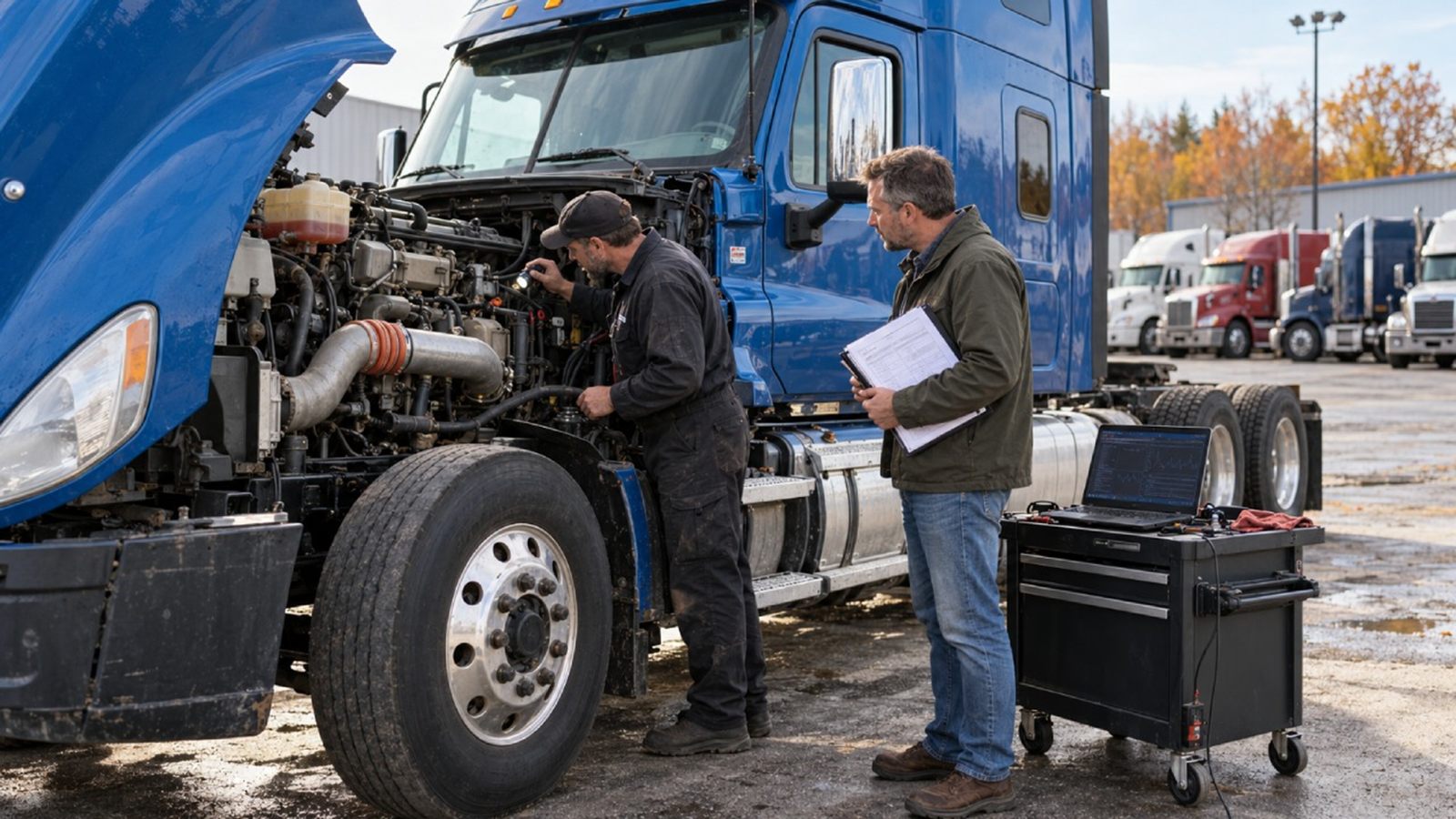
Make an inspection by your own mechanic a written condition of the sale, before any deposit is final. Have them pull whatever the engine's diagnostic system holds. Depending on the engine, that can include hours against the odometer, idle time, logged fault codes, regen history and fuel economy. Set it beside the maintenance file: oil changes, any oil analysis, DPF cleanings, injector and EGR work. Where records are missing, have the mechanic look further, and be honest about how much you still don't know about the truck.
The aftertreatment system and the EGR should both be on the truck and working. If the truck has been derated, ask what caused it and whether it came back after the repair. Ontario treats deleting or tampering with emissions equipment as illegal, so a deleted truck has to be restored to compliant condition, with proof, before you accept it. Otherwise walk away; a lower price doesn't make it legal. For warranty, take the VIN and engine serial number to an OEM dealer and get it in writing how much coverage is left and whether it transfers to you.
Ask a private seller why they're selling, whether the truck ran solo or team, what it hauled, whether it's been in a collision and how much is still owing on it. Ask a dealer where the truck came from and what they fixed before it went on the lot. A seller who won't let your mechanic look the truck over has given you your answer.
Before you book a viewing, get the VIN and a photo of the ownership permit from the seller, and run the lien search that same day.
About the author
Manpreet Singh
Works with small trucking fleets at ZyloFuel, a Canadian fuel card company for owner-operators and fleets of up to twenty trucks.