FMCSA now takes complaints about brokers and registration fraud. What that means for Canadian carriers
FMCSA takes broker and registration-fraud complaints, but filing does not guarantee an investigation or recover unpaid freight charges.
By Manpreet Singh November 8, 2026 4 min read
On November 6, 2026, the Federal Motor Carrier Safety Administration announced an expanded, renamed FMCSA Complaint Center, with dedicated categories for property brokers and registration-related fraud and identity theft. The former National Consumer Complaint Database also adds categories for entry-level driver training and intermodal equipment providers, and replaces “consumer” with “general public” in its audience wording.
For Canadian carriers dealing with US-regulated brokers, the important distinction is between reporting misconduct and getting a remedy. FMCSA says filing does not automatically trigger an investigation, violation or penalty. The agency also says it does not resolve individual payment or bond-claim disputes.
This is an expansion of an existing reporting system, not the first opportunity to report fraud. FMCSA’s fraud guidance dated April 7, 2025 already directed victims to the old database.
Which broker problems belong here?
FMCSA’s eligible-complaints page describes its property-broker jurisdiction in terms of operating authority and financial responsibility. Its examples include misrepresenting operations, using a business name different from the registered name, operating without required authority or registration, and failing to maintain required transaction records or financial accounts.
For non-payment, separate the unpaid debt from any suspected regulatory breach. Under FMCSA’s financial-responsibility guidance, suspected fraud or regulatory violations can be reported, but the agency does not decide the merits of individual commercial disputes. A Complaint Center submission is not a claim against the broker’s surety bond or trust fund. Keep pursuing the payment issue separately; get advice from a transportation lawyer where the debt or agreement is disputed.
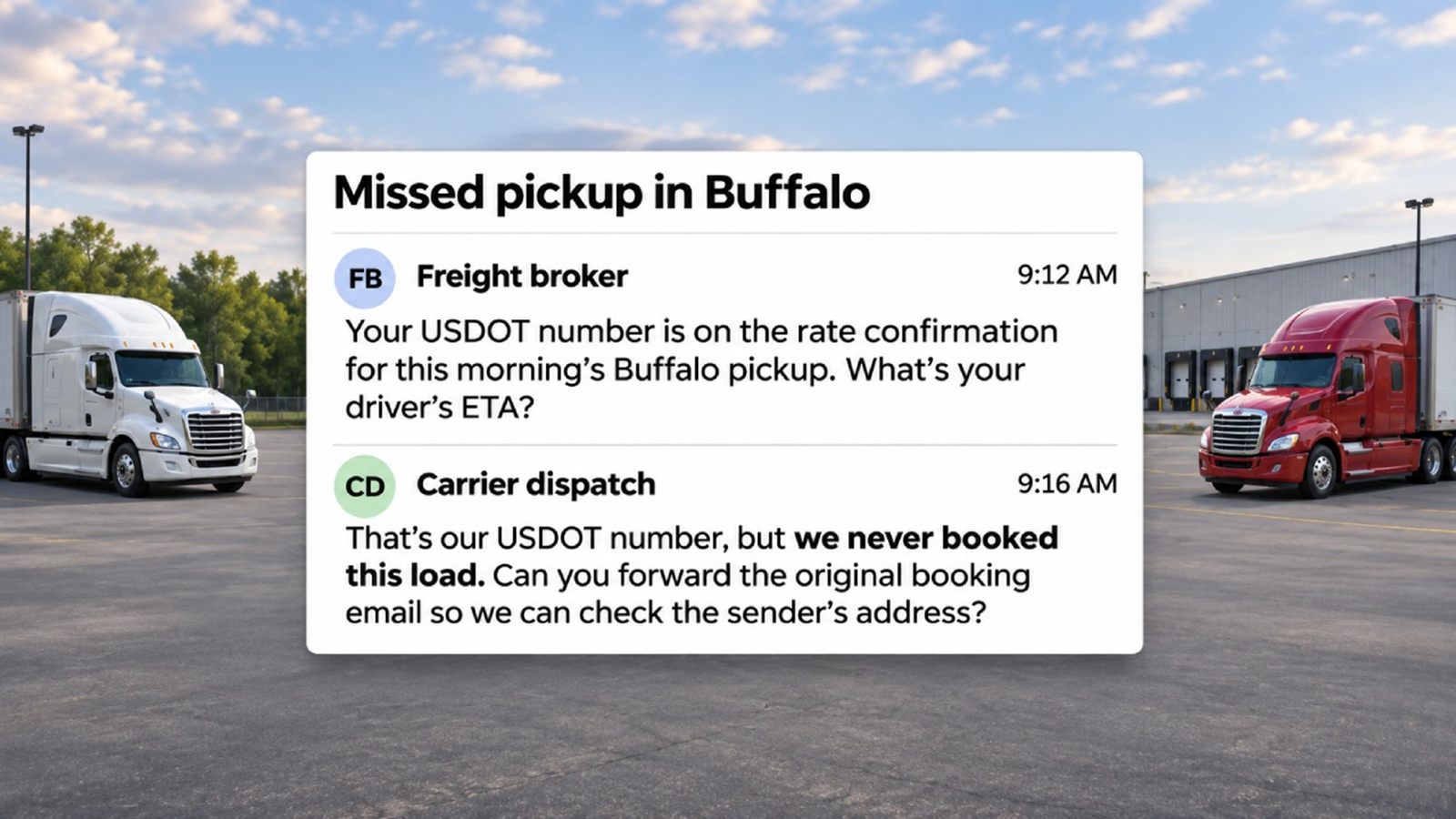
If you suspect double brokering, describe who offered the load, who reassigned it and whose authority was used, rather than relying on that label alone. FMCSA’s fraud guidance specifically addresses unregistered brokerage and unauthorised use of another carrier’s USDOT number. Identify what you know and what you suspect.
Withheld records need a similarly precise description. As checked for November 7, 2026, 49 CFR 371.3(c) gives each party to a brokered transaction the right to review the required transaction record. If access was refused, include your request and the response. FMCSA’s published complaint examples expressly mention failure to maintain records; they do not separately explain how every records-access dispute will be handled.
If someone is using your registration
The registration-fraud category covers registration information used without permission, obtained through deception, or falsified in a new application or change request. That is the relevant category when the issue is misuse of your carrier identity, rather than simply a broker owing you money.
Don’t stop at filing the complaint. FMCSA’s identity-theft guidance also tells victims to contact its support centre at 1-800-832-5660, check that their published company phone number is correct, and notify their insurer, load boards and factoring companies. It identifies local police, the FBI’s Internet Crime Complaint Center and the US Department of Transportation’s Inspector General as additional reporting routes.
Filing from Canada: what the published form shows
FMCSA’s filing instructions list owner-operators and trucking companies under Industry Professional. They do not state a US-residency requirement. The agency’s published contact-form screenshot includes country and state/province fields, and asks for your company’s USDOT number only if available. Your own USDOT number is therefore not presented as a prerequisite in that sample form.
Canadian postal-code acceptance and the complete broker- and registration-specific question sets could not be verified in the live forms. The following is based on FMCSA’s published instructions, not a completed Canadian test submission.
- Start at the FMCSA Complaint Center, select your filer role and choose the relevant complaint category.
- Describe the incident, including dates, locations and what happened. Select the allegation that best fits.
- Identify the company by name or USDOT number. The instructions allow manual company entry if the search does not find it.
- Provide contact details and supporting files. Review the choice about sharing your contact information with the reported company.
- Save or print the complaint before submitting, then save the case number shown after submission.
For a freight dispute, useful supporting material may include the rate confirmation, invoice, proof of delivery and correspondence. For identity misuse, preserve the messages and documents showing which identity was presented. DOT’s privacy assessment describes supporting contracts, correspondence and other evidence as part of the complaint process. Keep personal information in the designated fields rather than adding unnecessary personal details to the narrative.
If the form will not accept your details, or the categories do not fit, FMCSA publishes a telephone filing and assistance route: 1-888-368-7238, Monday through Friday, 8 a.m. to 8 p.m. Eastern. The agency encourages prompt reporting with the information available, rather than waiting until every detail is known.
What happens to the complaint?
FMCSA says complaints are placed in the company’s complaint file and used with other information to decide which companies to investigate. Its filing instructions promise notification after review about whether the complaint is actionable or non-actionable, not a guaranteed investigation.
There is also a public-search function. DOT’s privacy assessment describes company-level complaint counts without disclosing filers’ personal information or sensitive business information. The search tool’s published instructions cover company complaint histories for the past six years and warn that complaints may not have been verified or substantiated. A complaint count is not a finding of wrongdoing.
The available documentation does not establish when every new broker or registration-fraud submission appears in public search. Nor does the November 6 announcement report how many complaints in those categories have led to investigations or penalties. Filing puts your account before the regulator. It does not settle the allegation or the unpaid invoice.
About the author
Manpreet Singh
Works with small trucking fleets at ZyloFuel, a Canadian fuel card company for owner-operators and fleets of up to twenty trucks.