Fuel surcharge: what it covers and when a flat rate falls short
What a fuel surcharge pays for, how to check if your flat rate still covers diesel, and how to ask a shipper to tie it to a weekly index.
By Manpreet Singh October 24, 2026 2 min read
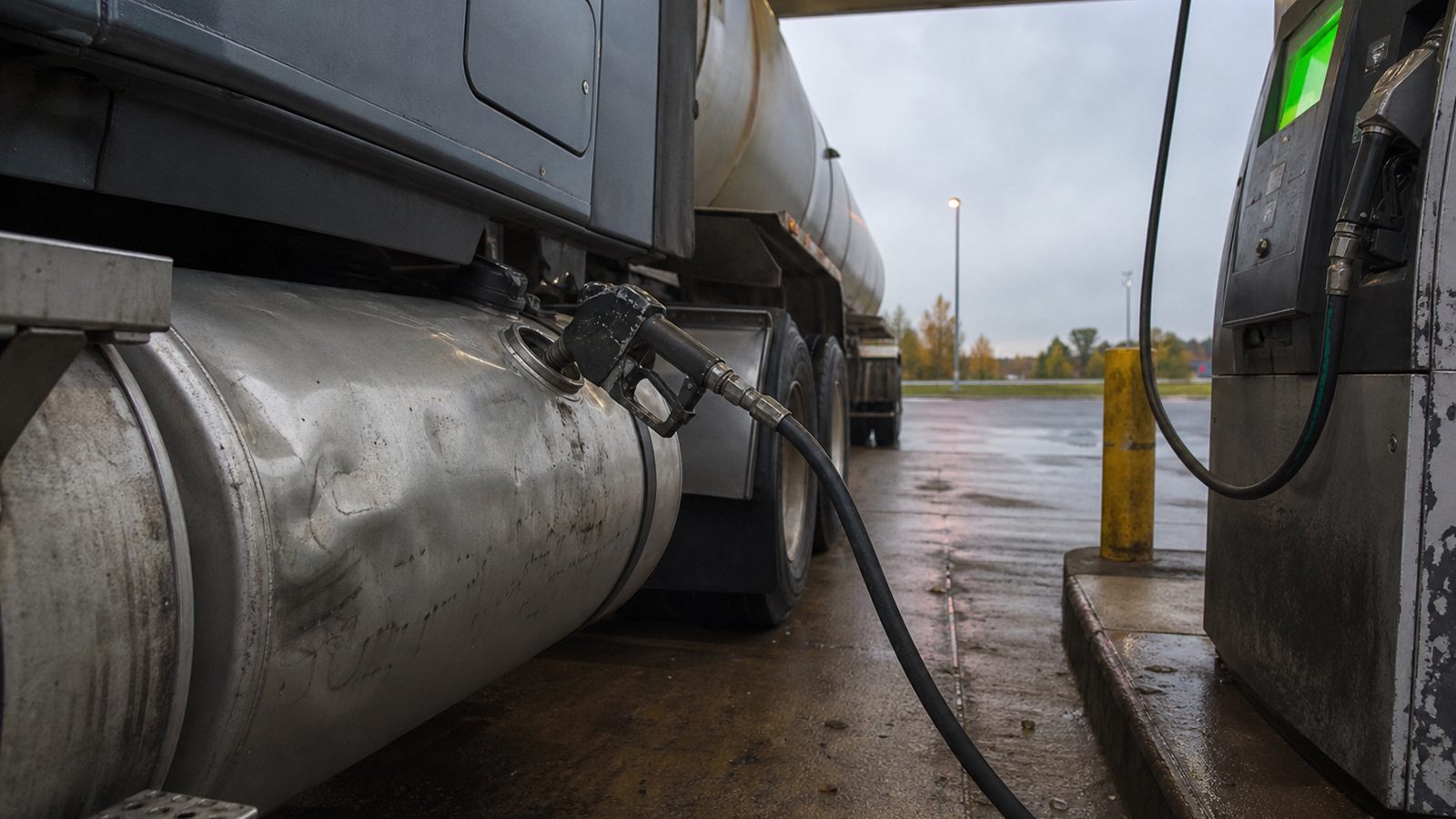
It's six in the morning at a fuel island in Woodstock. The pump rolls past $1,000 before the tanks are full. And the load you're about to haul pays the same fuel surcharge it paid in the spring.
A fuel surcharge is the extra a shipper pays you per kilometre for diesel above a base price you both agreed on. Fuel up to that base is already in your linehaul rate, and anything over it is supposed to come back to you through the surcharge. Set it as one flat number and it stops doing that job the first week diesel moves.
Take a truck burning 38 litres per 100 km. Use your own figure from your receipts and odometer, because everything below hangs on it. Say the contract's base price is $1.60 a litre and the surcharge was fixed at 15 cents a km back when diesel was $2.00, which was right at the time: 40 cents over base, times 0.38 litres a km, is 15.2 cents. Then diesel kept climbing. For the week ended September 29, 2026, Natural Resources Canada had the national average retail price above $2.64 a litre, as reported by Money.ca. At $2.64 you're $1.04 over base. Times 0.38, that's 39.5 cents a km, so the fixed 15 cents leaves you 24.5 cents short on every kilometre, which comes to $245 on a 1,000 km load and about $2,900 a month if you bill 12,000 km. Paid on loaded kilometres only? Then the fuel you burn deadheading isn't covered at all.
This is where the surcharge and the fuel bill get mixed up. The surcharge was never meant to pay for all your diesel, only the part above base, so it's easy to see a surcharge line on the settlement and figure fuel is looked after. It isn't. In the example above, every cent diesel has gone up since that 15 cents was set is coming out of your pocket.
A fair surcharge moves on a set schedule with a published price. For most lanes NRCan's weekly national average does the job, and if you mostly run in Ontario, the province publishes a weekly fuel price survey with diesel prices for ten markets. When you ask a broker or shipper to reset the surcharge, tie it to one of those indexes and read it weekly. Put the base price and the litres per 100 km in writing so either side can check the math any week they like. Freight buyers see the same diesel headlines you do. Show them the calculation. It's a lot harder to say no to than a request that just asks for more.
Before the next load goes out, pull last month's fuel receipts and odometer readings and work out your real litres per 100 km. Then send the shipper that calculation with your own numbers in it.
About the author
Manpreet Singh
Works with small trucking fleets at ZyloFuel, a Canadian fuel card company for owner-operators and fleets of up to twenty trucks.