Reporting CNG and LNG on your IFTA return
How CNG and LNG go on an IFTA return as their own fuel types, which units to watch, what receipts to keep, and the Q4 2026 provincial rates.
By Manpreet Singh October 24, 2026 5 min read
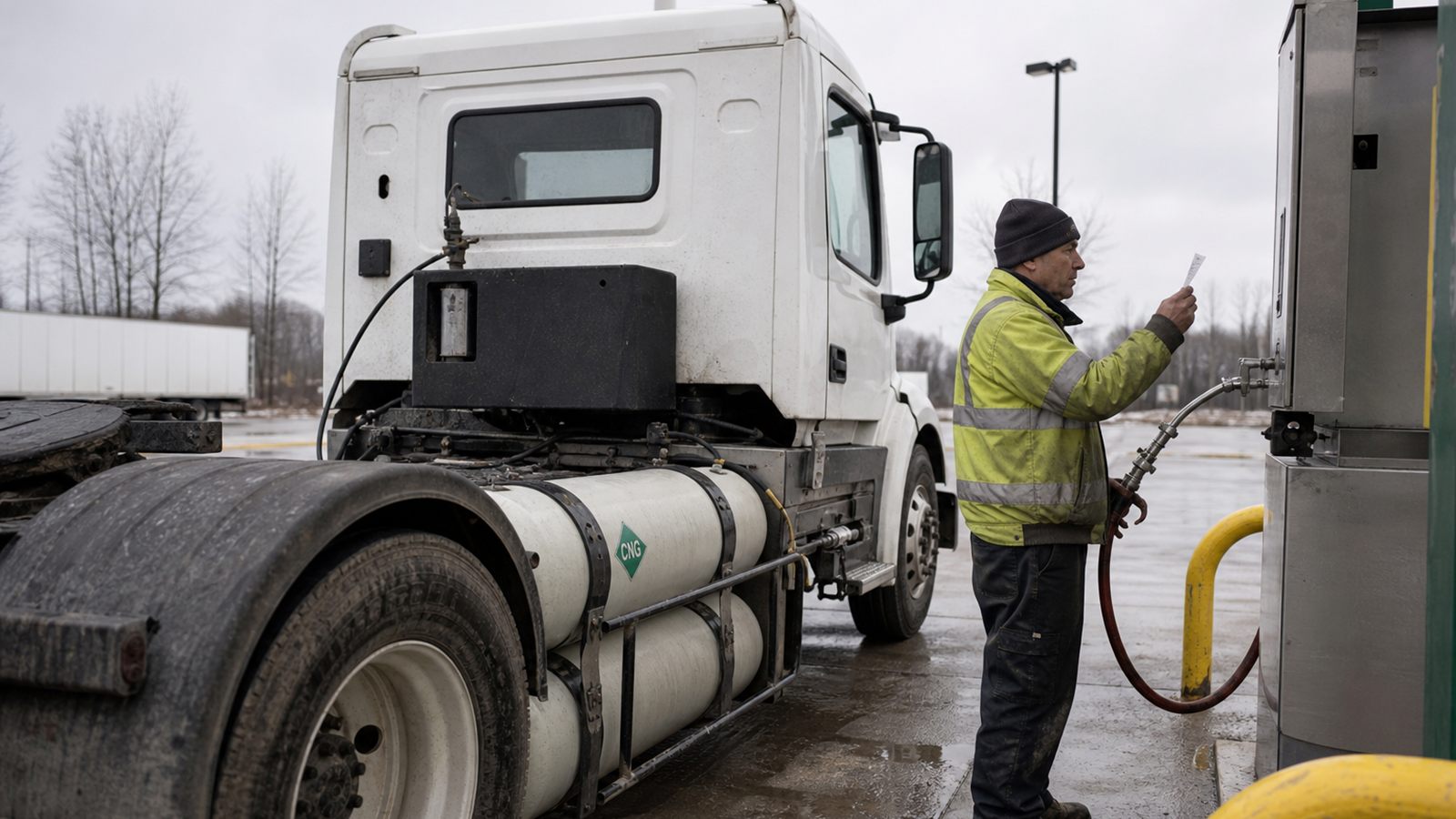
Natural gas goes on an IFTA return as its own fuel type, and the carriers who have trouble with it usually have trouble in one of two places. Some fills end up in a unit the return doesn't use. Some provinces get a natural gas tax line even though they don't charge one, and others get missed when they do.
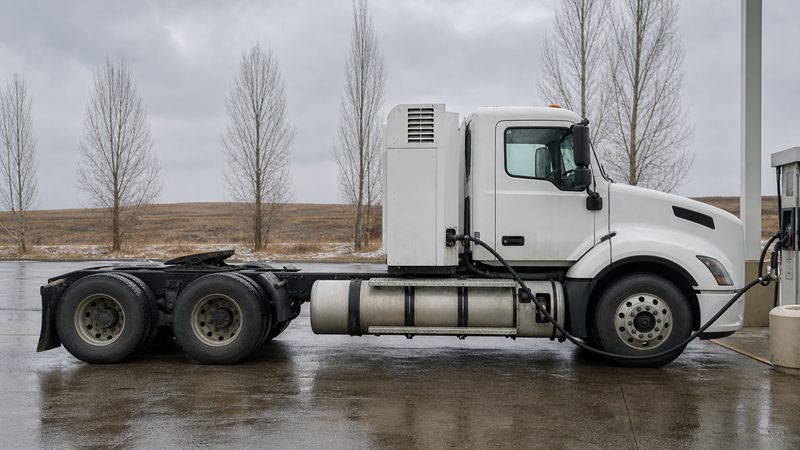
Trucknews.com reported on October 19, 2026 that Hexagon Agility is seeing fleets go back to CNG quotes they had shelved, now that the gap between diesel and gas prices has widened. If you're one of them, the truck is the easy part. The quarterly return is where a gas truck works differently from a diesel.
Its own fuel type, with its own average
The return is worked out one fuel type at a time. Your diesel trucks have their total kilometres, their total litres and a fleet average. Your gas trucks get their own set of those figures. If a CNG truck's kilometres end up in the diesel totals, the diesel average looks better than it is and the gas side has nothing to stand on. The IFTA tax matrix also lists LNG and CNG in separate columns, apart from diesel and from each other, so a fleet with one truck of each is reporting two fuel types besides its diesel.
Units are the next thing to sort out. Diesel is bought in litres and reported in litres. Natural gas can be sold in equivalents or by weight, depending on the station and which side of the border you're on, and makers rate their tanks in equivalents too (the Hexagon Agility demonstration truck in the trucknews piece carries 265 diesel gallon equivalents). Your return wants one unit for each fuel type, whatever your base jurisdiction's form asks for. To change a receipt into that unit you have to use the conversion factor your base jurisdiction accepts. A number off a dispenser sticker or a spec sheet won't do if it differs. Before the first quarter you file with a gas truck, ask your IFTA office for the factor in writing. Ask your accountant or that office to check the rest of your setup too. This article isn't tax advice.
What the provinces charge for 4Q2026
The provinces split down the middle. Below is what each one has posted to the IFTA matrix for October to December 2026, in Canadian dollars, with diesel for comparison. Where a cell says no rate, the province hasn't listed one for that fuel.
| Province | Diesel | LNG | CNG |
|---|---|---|---|
| Alberta | 0.0000 | no rate | no rate |
| British Columbia | 0.1500 | no rate | no rate |
| Manitoba | 0.1250 | 0.0900 | 0.0900 |
| New Brunswick | 0.1545 | 0.1545 | 0.1545 |
| Newfoundland and Labrador | 0.0950 | no rate | no rate |
| Nova Scotia | 0.1540 | 0.1540 | 0.1540 |
| Ontario | 0.0900 | no rate | no rate |
| Prince Edward Island | 0.1415 | 0.1527 | 0.0847 |
| Quebec | 0.2020 | no rate | no rate |
| Saskatchewan | 0.1500 | no rate | no rate |
A few things stand out. New Brunswick and Nova Scotia charge gas trucks the same as diesel. Manitoba charges gas less than diesel. Prince Edward Island has different rates for LNG and CNG. Ontario and Quebec, where most of the carriers reading this are based, list nothing for either gas. Alberta's diesel line is zero because, according to the IFTA rate-change notice, the province brought in fuel tax relief effective October 1, 2026. For a gas rate, ask the province which unit it applies to before you convert your receipts. A wrong guess there throws off every line.
When a province has no rate listed, its kilometres still go on the return. They count toward the gas truck's total distance and its average. All the missing rate changes is the tax owing for that province.
Public stations or a yard station: the records each leaves
Most gas trucks fill one of two ways. Each leaves a different paper trail.
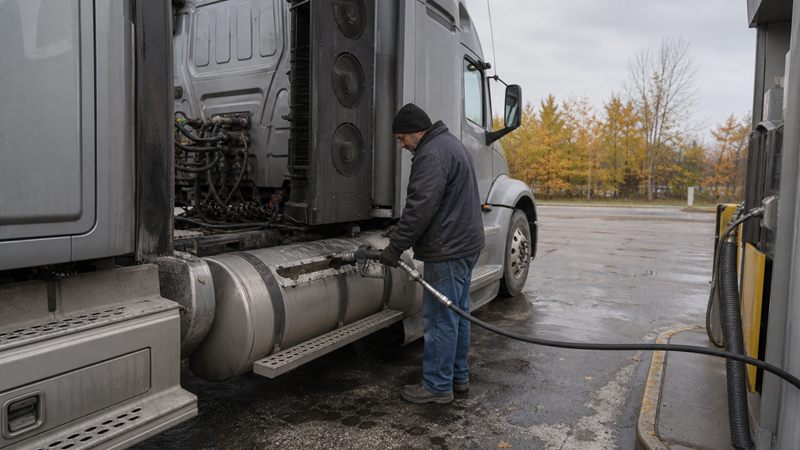
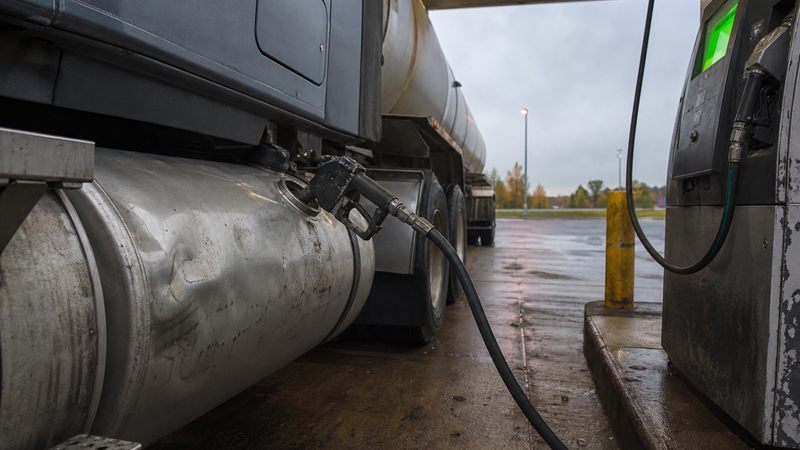
Filling at public stations along the lane works the way diesel always has. Each fill gives you a receipt, and it should show the date, the station and its location, the fuel type, the quantity and its unit, and the truck's unit number. Those are what an auditor checks on a diesel receipt, and on a gas receipt they also have to agree with the conversion you used. It goes wrong when stations are far apart and drivers fill wherever they can, so one quarter's receipts come in three different units from two countries. It also goes wrong when a receipt shows the quantity but not the unit, because then nobody can say what was bought.
The other way is a station in your own yard, or a fleet station you have a contract with, where trucks fill overnight or at the end of a shift. That makes the receipts simpler and the bookkeeping harder. There's one meter, one bill from the supplier, and it's on you to show how much went into each truck and when. A log of withdrawals by unit, kept every day, is the record that holds up. Totals added up at the end of the month are much harder to defend. You also need to know whether the gas was billed with tax included, because that decides whether you can claim a credit for tax you already paid.
The yard setup suits fleets whose trucks come back to the same place most nights: regional work, dedicated runs, shuttles. Public stations suit long trips across several provinces, if the lane has enough of them. In the trucknews piece, Hexagon Agility's Ian MacDonald points to Quebec's existing network of stations and to expansion in Alberta through Clean Energy's partnership with Tourmaline. A fleet that runs both kinds of work will likely end up keeping both kinds of records.
Some of this is still moving. The matrix says the 4Q2026 rates aren't final until December 4, 2026. Alberta's relief could change again next quarter. The provinces with no gas rate have no rate for this quarter only, and the matrix is where a new one would show up first.
About the author
Manpreet Singh
Works with small trucking fleets at ZyloFuel, a Canadian fuel card company for owner-operators and fleets of up to twenty trucks.